Positionen | Romantische Berlin Rikscha Stadt-und Foto Tour - inkl. Abholung
Romantische Berlin Rikscha Stadt-und Foto Tour - inkl. Abholung
(9) Bewertungen
Mitte
Wichtige Informationen
•
Barrierefrei
•
Säuglinge und Kleinkinder können im Kinderwagen oder Buggy mitfahren
•
Assistenztiere erlaubt
•
Geeignet für alle körperlichen Fitnessniveaus
Stornierungsbedingungen
Für eine vollständige Rückerstattung stornieren Sie mindestens 24 Stunden vor der geplanten Abflugzeit.
•
Um eine vollständige Rückerstattung zu erhalten, müssen Sie mindestens 24 Stunden vor Beginn des Erlebnisses stornieren.
•
Die Stornierungszeiten richten sich nach der Ortszeit des Erlebnisses.
•
Wenn Sie weniger als 24 Stunden vor Beginn des Erlebnisses stornieren, wird der von Ihnen gezahlte Betrag nicht zurückerstattet.
•
Für dieses Erlebnis ist eine Mindestanzahl von Reisenden erforderlich. Wenn es storniert wird, weil die Mindestanzahl nicht erreicht wird, erhalten Sie ein anderes Datum/Erlebnis oder eine vollständige Rückerstattung.
•
Alle Änderungen, die weniger als 24 Stunden vor Beginn des Erlebnisses vorgenommen werden, können nicht akzeptiert werden.
Werden Sie unser Lokalkurator
Sind Sie bereit, Ihre Hobbys in ein Geschäft zu verwandeln?
Romantischen Stadt-Tour, die Ihnen die versteckten Schönheiten und romantischen Ecken der Stadt offenbart.
Tauchen Sie ein in das pulsierende Herz Berlins, während wir Sie durch malerische Kieze führen, gesäumt von charmanten Boutiquen und gemütlichen Cafés. Entdecken Sie die faszinierende Welt der Berliner Straßenkunst und lassen Sie sich von den verborgenen Juwelen der urbanen Kunstszene begeistern.
Genießen Sie eine entspannte und umweltfreundliche Fahrt in unseren liebevoll gestalteten Rikschas und lassen Sie sich von Ihrem persönlichen Guide durch die Straßen der Stadt führen. Erfahren Sie Berlin aus einer neuen Perspektive, fernab von überfüllten Touristenpfaden.
Entdecken Sie roman...
Höhepunkte
Von 1 Stunde bis 2 Stunden
Angeboten in Deutsch (Deutsch) & 6 Andere
Kostenlose Stornierung
Mobiles Ticket
Von 1 Stunde bis 2 Stunden
Angeboten in Deutsch (Deutsch) & 6 Andere
Kostenlose Stornierung
Mobiles Ticket
Was ist enthalten?
Reiseführer
Private transportation
Warme Decke
WiFi on board
Alcoholic Beverages
Fotograf
Musik auf Wunsch
Gratuities
Treffpunkte
Abreise
Pariser Platz 4A
Brandenburg Gate at Starbucks
Rückkehr
Romantische Berlin Rikscha Stadt-und Foto Tour - inkl. Abholung
(9) Bewertungen
Mitte
Über uns
Romantischen Stadt-Tour, die Ihnen die versteckten Schönheiten und romantischen Ecken der Stadt offenbart.
Tauchen Sie ein in das pulsierende Herz Berlins, während wir Sie durch malerische Kieze führen, gesäumt von charmanten Boutiquen und gemütlichen Cafés. Entdecken Sie die faszinierende Welt der Berliner Straßenkunst und lassen Sie sich von den verborgenen Juwelen der urbanen Kunstszene begeistern.
Genießen Sie eine entspannte und umweltfreundliche Fahrt in unseren liebevoll gestalteten Rikschas und lassen Sie sich von Ihrem persönlichen Guide durch die Straßen der Stadt führen. Erfahren Sie Berlin aus einer neuen Perspektive, fernab von überfüllten Touristenpfaden.
Entdecken Sie roman...
Höhepunkte
Von 1 Stunde bis 2 Stunden
Angeboten in Deutsch (Deutsch) & 6 Andere
Kostenlose Stornierung
Mobiles Ticket
Von 1 Stunde bis 2 Stunden
Angeboten in Deutsch (Deutsch) & 6 Andere
Kostenlose Stornierung
Mobiles Ticket
Was ist enthalten?
Reiseführer
Private transportation
Warme Decke
WiFi on board
Alcoholic Beverages
Fotograf
Musik auf Wunsch
Gratuities
Treffpunkte
Abreise
Pariser Platz 4A
Brandenburg Gate at Starbucks
Rückkehr
Reiseplan
1
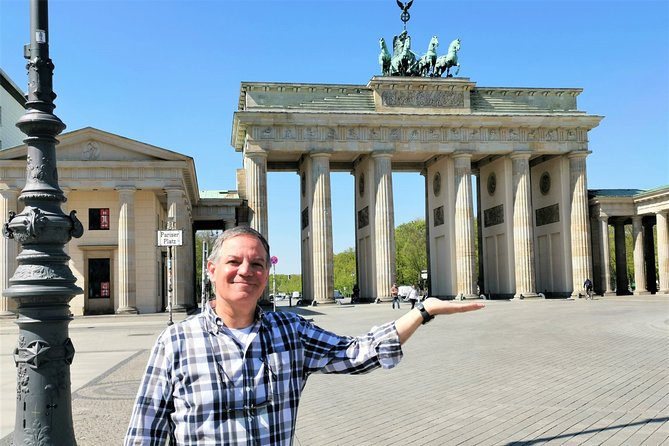
Brandenburger Tor
Das Brandenburger Tor aus Sandstein ist eine der größten und schönsten Schöpfungen des deutschen Klassizismus. Es entstand zwischen 1788 und 1791 nach Entwürfen von Carl Gotthard Langhans dem Älteren, der sich stark an den Propyläen der Athener Akropolis orientierte. König Friedrich Wilhelm II. hatte zuvor den Bau des Brandenburger Tores in Auftrag gegeben, da er einen würdigen architektonischen Abschluss für den Boulevard Unter den Linden suchte.
0 Minute
2
Reichstagsgebäude
Mit dem Reichstagsgebäude sind bedeutende Wendepunkte und Ereignisse der deutschen Geschichte verbunden. Am 9. November 1918 rief der SPD-Politiker Philipp Scheidemann vom Balkon am Westportal die Republik aus. Am Abend des 27. Februar 1933 kam es zum „Reichstagsbrand“. Plenarsaal und Kuppel wurden völlig zerstört. Eine rote Fahne der Sowjetunion, gehisst am 30. April 1945 von zwei Rotarmisten, symbolisierte den Sieg über das „Dritte Reich“.
2 Minuten
3
Soviet Memorial Tiergarten
Flankiert von zwei Panzern des Typs „T 34“ steht in der Mitte des Platzes eine bronzene Statue eines Rotarmisten mit seinem Gewehr auf der Schulter. An den dahinter liegenden Säulen sind Texte mit den Namen gefallener sowjetischer Soldaten angebracht. Im hinteren Teil des Denkmals befinden sich die Gräber von rund 2500 Soldaten
0 Minute
4
Tiergarten
Geschichte des Tierparks Ende des 17. Jahrhunderts ließ Kurfürst Friedrich III. aus dem ehemaligen Jagdrevier einen „Lustpark für die Bevölkerung“ schaffen. Im Laufe der Zeit wurde der Park nach mehreren Vorbildern umgestaltet, unter anderem wurde der Tierpark zwischen 1833 und 1838 durch den berühmten Landschaftsarchitekten Peter Joseph Lenné in einen englischen Volkspark umgestaltet. Sehenswürdigkeiten im Tierpark Nicht nur Bäume, Sträucher und Grünflächen bestimmen das Gesicht des rund 200 Hektar großen Tierparks. Viele Sehenswürdigkeiten wie Denkmäler und Mahnmale, Brücken, die Siegessäule, das Bundespräsidentenamt, das Haus der Kulturen der Welt oder der Englische Garten laden zu einem Tagesspaziergang durch den Park ein. Der rund um einen Teich angelegte Englische Garten gibt Einblick in die englische Landschaftsarchitektur und ist heute eine der schönsten Ecken des Tierparks.
0 Minute
5
Potsdamer Platz
Der Potsdamer Platz wurde von Architekten als Gesamtquartier geplant. Mit Erfolg – die Cafés, Kinos und Geschäfte zwischen den futuristischen Wolkenkratzern werden von Berlinern und Touristen gleichermaßen genutzt. Der Plan der Stadtplaner ist aufgegangen: Die Berliner haben die Cafés, Kinos und die große Einkaufspassage der neuen Daimler City sehr gut angenommen. Auf 6,8 Hektar zwischen Potsdamer Platz und Reichpietschufer entstand ein komplett neues Quartier.
2 Minuten
6
Topographie des Terrors
Das ab 1987 als „Topographie des Terrors“ bezeichnete Areal war zentraler Ort der Planung und Steuerung der meisten NS-Verbrechen. Zwischen 1933 und 1945 waren hier mit dem Geheimen Staatspolizeiamt, der Reichsführung SS und dem Reichssicherheitshauptamt die wichtigsten Institutionen des nationalsozialistischen Terrorapparates aus SS und Polizei untergebracht.
2 Minuten
7
Gropius Bau
Der Martin-Gropius-Bau widmet sich der Kulturgeschichte, der Gegenwartskunst und der Fotografie.
0 Minute
8
Gedenkstätte Berliner Mauer
Wand
0 Minute
9
Checkpoint Charlie
Während der Teilung Berlins war der ehemalige Militärkontrollpunkt Checkpoint Charlie neben der Glienicker Brücke der bekannteste Grenzübergang der drei von den Amerikanern kontrollierten Grenzpunkte. Die anderen waren die Grenzkontrollpunkte Helmstedt-Marienborn (Checkpoint Alpha) und Dreilinden-Drewitz (Checkpoint Bravo). Der Übergang durfte nur von Ausländern und Mitarbeitern der Ständigen Vertretung der BRD in der DDR sowie von DDR-Funktionären benutzt werden.
2 Minuten
10
Friedrichstraße
ie Friedrichstraße durchzieht Berlin als Nord-Süd-Achse. Zwischen Checkpoint Charlie und Bahnhof Friedrichstraße entstand nach dem Fall der Mauer eine beliebte Einkaufsmeile.
0 Minute
11
Gendarmenmarkt
Der Platz wurde Ende des 17. Jahrhunderts nach Plänen von Johann Arnold Nering angelegt. Damals siedelten sich in diesem Viertel französische Einwanderer, vorwiegend französische Protestanten (Hugenotten) an. Der Marktplatz hieß zunächst Esplanade, dann in chronologischer Reihenfolge Lindenmarkt, Friedrichstädtischer Markt und Neuer Markt. Schließlich wurde er 1799 in Gendarmenmarkt umbenannt, weil sich hier von 1736 bis 1782 die Wache und die Stallungen des Wachregiments „Gens d´armes“ befanden.
2 Minuten
12
Deutscher Dom
Die Dauerausstellung „Wege – Irrwege – Umwege“ im Deutschen Dom zeigt auf insgesamt fünf Etagen die historische Entwicklung der liberalen parlamentarischen Demokratie in Deutschland.
0 Minute
13
Konzerthaus
Das Konzerthaus am Gendarmenmarkt ist ein Meisterwerk klassizistischer Architektur und zählt zu den Hauptwerken Karl Friedrich Schinkels. Bereits 1776 wurde auf Betreiben Friedrichs des Großen an dieser Stelle ein kleines Komödienhaus eröffnet, das nach den Plänen des preußischen Oberbaudirektors Johann Bouman d. Ä. errichtet wurde. Die Umbenennung in Königliches Nationaltheater 1787 markierte den Aufstieg zu einem der führenden Theater des Landes
0 Minute
14
Bebelplatz
Mitten in der Museumsmitte Berlins lässt der Bebelplatz erahnen, wie man sich vor fast 300 Jahren eine schöne Stadt vorstellte. Die Nazis entweihten den Platz mit Bücherverbrennungen, an die heute ein Mahnmal erinnert. Am 10. Mai 1933 ließen die Nationalsozialisten auf dem Bebelplatz über 20.000 Bücher verbrennen. Sie waren der Meinung, die von ihnen ausgewählten Bände seien „von nichtdeutschem Geist“. Darunter waren Bücher von Erich Kästner, der Familie Mann, Magnus Hirschfeld, Lion Feuchtwanger, Karl Marx, Else Lasker-Schüler und fast 400 weiteren Autoren. Auch Heinrich Heines Bücher wurden verbrannt. Hätten Sie es stattdessen gelesen, wären Sie auf Heines Bemerkung gestoßen, dass dort, wo man Bücher verbrennt, auch Menschen sind.
0 Minute
15
Neue Wache
Direkt neben dem Zeughaus, in dem heute das Deutsche Historische Museum untergebracht ist, steht die eher kleine Neue Wache. Sie wurde zwischen 1816 und 1818 nach den Entwürfen von Karl Friedrich Schinkel erbaut und ist seit 1993 die zentrale Gedenkstätte in der Bundesrepublik Deutschland für die Opfer von Krieg und Gewaltherrschaft.
2 Minuten
16
Museumsinsel
Die Museumsinsel im Zentrum Berlins ist einer der herausragendsten Museumskomplexe Europas und zählt zum UNESCO-Weltkulturerbe.
0 Minute
17
Berliner Dom
Mit seinen markanten Gestaltungsmerkmalen ist der Berliner Dom ein Muss für jeden Kirchenliebhaber und Besucher der Stadt.
0 Minute
18
Lustgarten
Der Lustgarten auf der Museumsinsel gehörte einst zum Berliner Stadtschloss. Heute ist der weitläufige Platz ein beliebter Treffpunkt von Berlinern und Touristen.
0 Minute
19
Stiftung Neue Synagoge Berlin - Centrum Judaicum
Was davon übrig blieb, erstrahlt heute in neuem Glanz: Die Neue Synagoge an der Oranienburger Straße. Sie war einst die größte und bedeutendste Synagoge Deutschlands.
0 Minute
20
Nikolaiviertel
Das Nikolaiviertel ist Berlins erstes und damit ältestes Wohnviertel. Neben der Nikolaikirche bietet der Stadtteil Altstadtflair mit historischen Häusern, Restaurants und Cafés.
0 Minute
21
Alexanderplatz
Ob in den 1920er-Jahren, zu DDR-Zeiten oder heute: Der berühmte Alexanderplatz war und ist einer der lebendigsten Plätze Berlins.